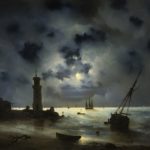
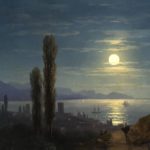
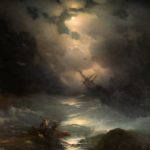
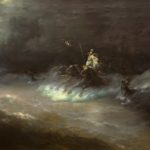
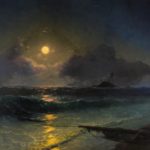
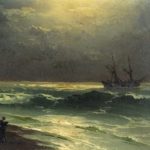
The Sea Shore at Night. By the Lighthouse. 1837

The history of Russian art in the 19th century is rich with talented, bright and outstanding personalities. One of the most prominent and at the same time mysterious, Ivan Konstantinovich Aivazovsky (1817–1900), a painter of seascapes, is widely recognized in the world but has been gaining reserved appreciation on the part of Russian artistic critique. There exists a popular notion among art historians that we ourselves create great painters of the past — that each generation takes from their works only the subjects declared «modern» and neglects everything else. It is true for Aivazovsky in the sense that he was one of the consistent romantic artists of the European scale and European romantic tendencies were reflected in his creative works to a great extent. But in the 19th century Russia, these tendencies were necessary for a very short period of time and not in full measure. It is also true that even now, Aivazovsky attracts growing attention which is stimulated not only by the number of zeroes in the price of his creative works at international art auctions.
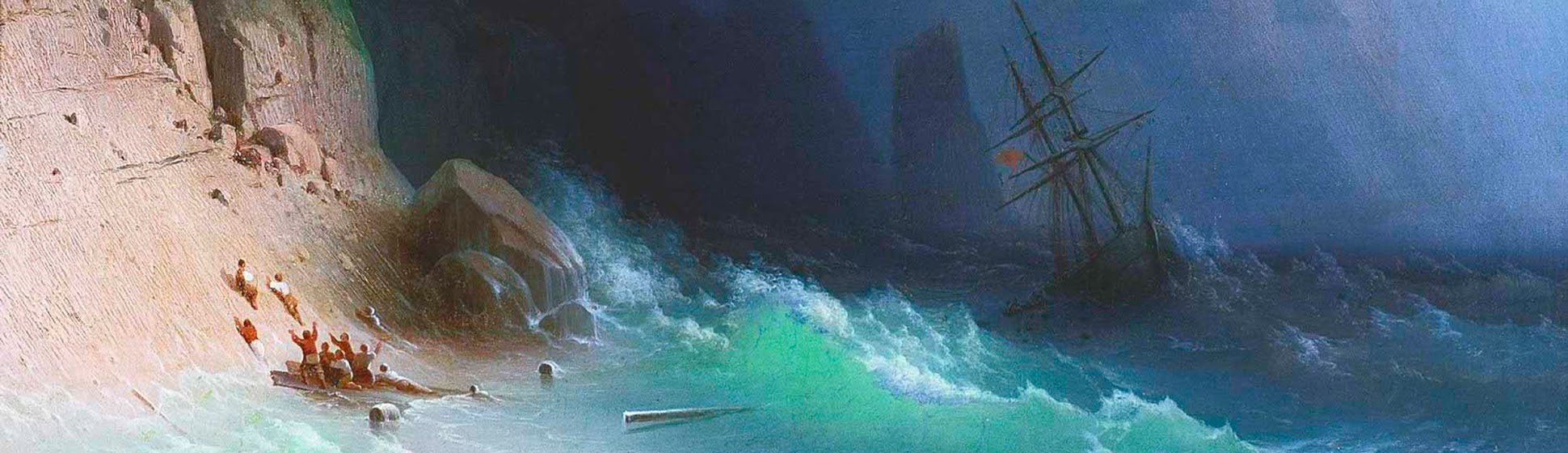
In Western European art, attention to the feelings of the lyrical hero (which were identified with the feelings of the painter himself) and to his individualism — two main features of romanticism, rose in the period when neo-classicism was in its prime. In 1756, the philosopher-statesman Burke published his work, «Inquiry into Origins of the Sublime,» in which he described aims and categories of romanticism. Thus, in the middle of the 18th century in Western European art, began development of the concept of this new style. In the second half of the 18th century and at the beginning of the 19th century, Russia, unlike many other countries, did not undergo rapid transformation in its artistic orientation.
The ideas of theprevious period — classicism, strongly influenced by academic manner were still in progress in art. To a great extent, it is connected with the fact that for Russia, it was a time of political shock. The necessity of strong political power and its presence brought to the forefront in the development of public thought, philosophy and aesthetics civil tendencies, which in the general cultural process were embodied in the forms of the art of classicism.
Before the time when romanticism arose, the main genres of fine art were historical, embracing works of art from the Bible and mythological subjects, and portraits. Since the new style didn’t burst into Russian art suddenly, dramatically changing it, painters gradually passed on the unusual things which introduced this style, while still maintaining the main genres of academic art.
Russian romantic aesthetics started its development only in the 1820s, and in the middle of the 19th century, romanticism was forced out by realism with its new concept of nature perception and disregard for everything new and important that flourished in art in the previous period. I.K.Aivazovsky was one of the few painters who stayed faithful to the ideals of romanticism all his life, that is, to the end of the 19th century. Being a real romanticist, he was an individualist — his talent and skill made it possible to become a non-conformist to the extent that Russian art critics perceived him as an outsider, from the 1860s.
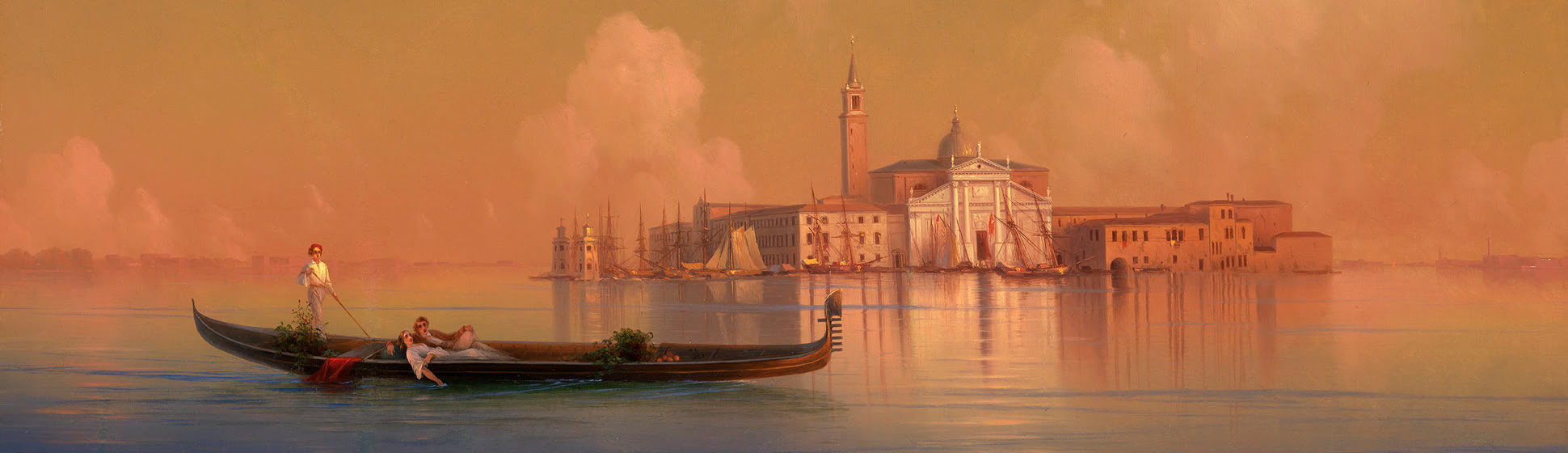
The phenomenon of I.K.Aivazovsky attracted the attention of many authoritative and respected authors. Perhaps it is impossible to tell exhaustively about a painter of such a scale. Today, when almost two centuries separate us from the time when I.K.Aivazovsky lived and worked, people might refer to him the same way as citizens of Great Britain refer to their national celebrity, W. Shakespeare, «a familiar stranger». To some extent, this can be said about many painters of that time, since the destiny of every talented person during the romantic period was unique and original. Real events of Aivazovsky’s life were interlaced with legends and a veil of mystery was drawn over his personality. Partially the reason is from the scarcity of information published about him during his lifetime. Partially, it can be explained by the fact that the chronology of his creative work did not fit the time frame for development of different styles as defined by Russian art experts. The system of classification was a procrustean bed, very restricting for those who don’t fit. Possibly that was the reason why at the end of the 19th century, some Russian cultural figures thought it proper to demean Aivazovsky’s art and his being a prolific painter.
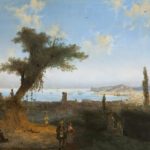
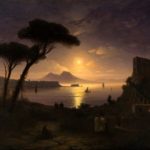
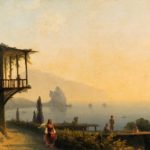
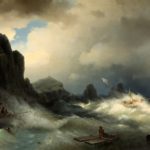
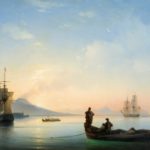
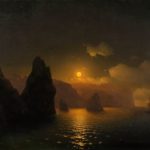
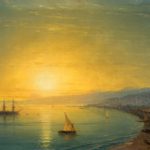
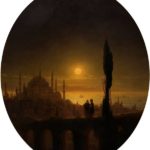
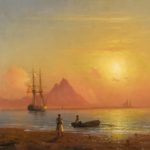
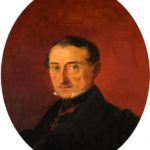
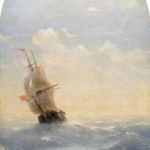

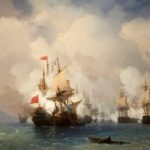
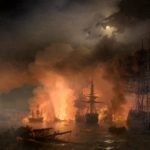
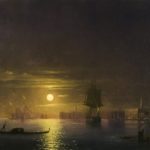
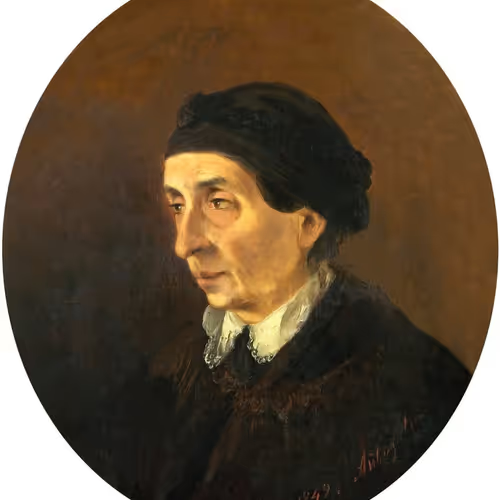
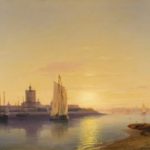
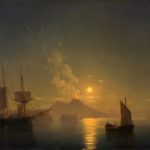

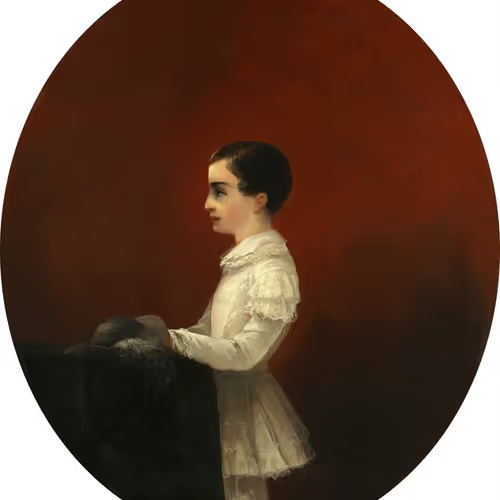
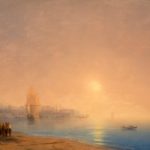
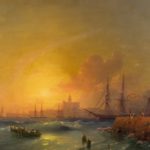

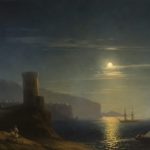
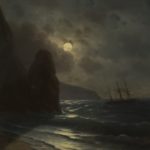
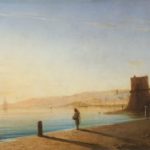
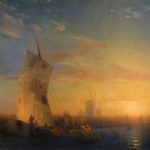
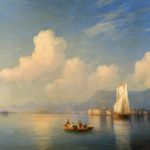


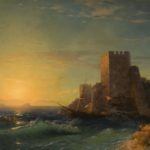


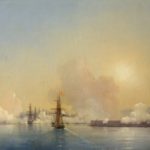
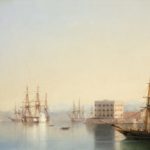
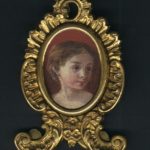
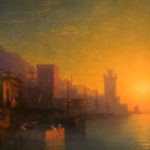

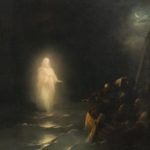

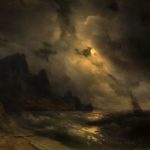
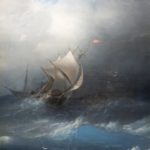

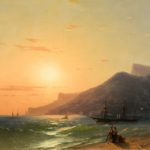

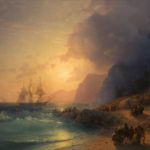

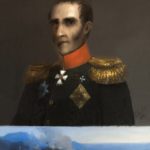
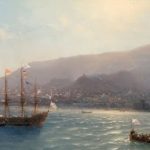

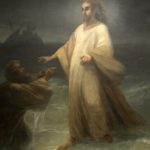
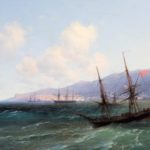
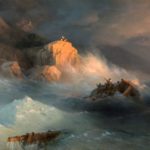
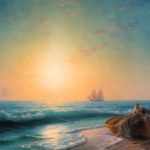

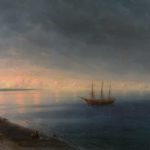
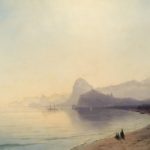




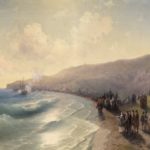

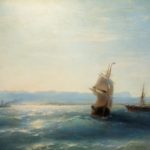
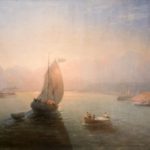








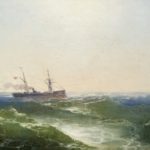
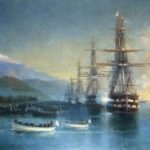

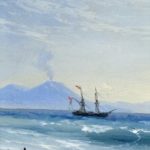
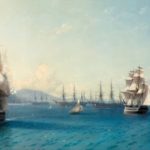

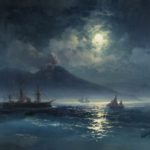
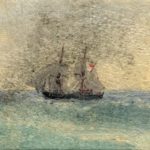


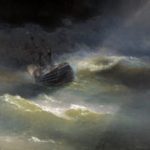
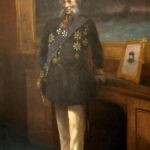
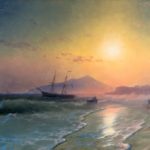

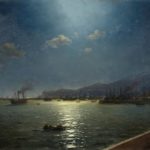
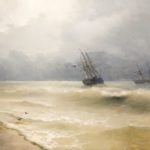
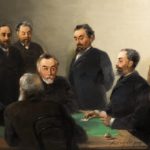

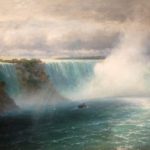





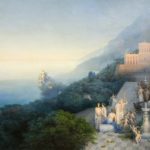






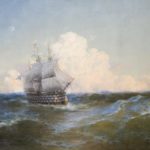


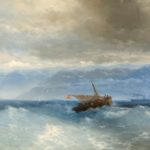
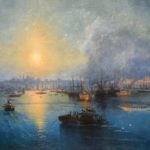

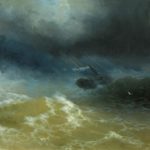









The habitual respect of people in this country for «authoritative opinion» can explain why that slighting attitude was transferred to the 20th century. But time is the best judge. Now, we perceive the creative work of I.K.Aivazovsky as part of the European cultural process; we understand that his romantic ego, declaring its individuality forced him to struggle for his values even when realism became the main style inRussian art. We see that his interest inthe scenes of oriental life parallel his depiction of Ukrainian life at the time (since he was brought up in Armenian ways and many local traditions seemed strange to him.) We realize that smoke over Mount Vesuvius in many of his pictures is a special sign, reminiscent of the shock which educated Europe experienced during the archeological excavation of Pompeii, ruined in 79 AD when this volcano erupted. Portraits and especially self-portraits are not perceived as second rate works for this outstanding marine painter, but as evidence of self-awareness and his own uniqueness, a characteristic common to romantic painters.
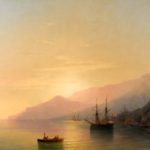
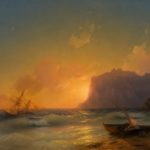
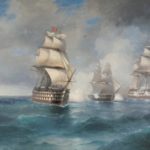
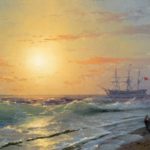
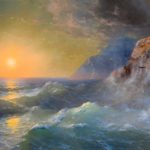
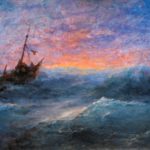
We appreciate the ways he often depicts different aspects of the same subjects as evidence of his deep artistic analysis. We understand that his passion for bright colours was very typical of romantic art in general. We admire his ability to convey aerial environment and to play skillfully with the effects of illumination. We realize that the main element of his paintings is light and the only constant of his landscapes are constant changes in nature. He was marked by brilliant talent; he was keen at seeing the beautiful. People admired scenes in his pictures that might leave them indifferent when viewed in nature. The unique and world’s largest collection of creative works by this outstanding marine painter makes it possible to reflect on these subjects and to study them. This collection contains 416 items (141 paintings and 275 graphic works) and is located in the Aivazovsky Art Gallery in Feodosia. It was the first public art gallery in the South of Russia, founded by the artist himself and situated in the big exhibition hall associated with his villa. It opened on July 29, 1880, on the maestro’s birthday.
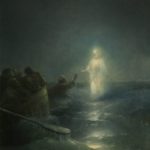
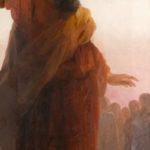
During thefirst 20 years of its existence, thegallery’s collection and its exposition changed regularly. I.K.Aivazovsky often made exhibitions in Russia and abroad. The pictures were sold and as a rule, they didn’t come back to Feodosia. The painter worked rather quickly and in several months, the hall was full of his new creative works. Thus, one exposition was replaced by another and visitors could always get new impressions. After I.K.Aivazovsky’s death in 1900, the gallery became the town’s property according to the painter’s will. «I sincerely wish that the building housing my picture gallery… and all its contents: pictures, statues and other works of art become the property of the city of Feodosia and in memory of myself, I will (the gallery) to Feodosia, my native town…» Up to 1921, the collection remained the same. It consisted of 47 works of art: 46 paintings came to the gallery according to the painter’s will and the last unfinished work was donated by his widow, Anna Nikitichna Aivazovskaya. In the 1920s, in the course of the widespread development of museums, our gallery’s collection was supplemented by 27 paintings. The most fruitful years were in the 1930s when 37 works came to the gallery. In 1930, we celebrated the 50th anniversary of the gallery and a large exhibition of Aivazovsky’s pictures from other museums was held here. Afterward, 14 of these paintings became the gallery’s property in exchange for other works of art according to the permission of the Central Museum Office. During the same period, the gallery obtained 10 Biblical pictures by Aivazovsky from the Armenian churches in Feodosia which were closed at the time During thenext decades, thecollection did not grow as rapidly. In the 1940s, 11 pictures came; in the 1950s — 5; in the 1960s — 4; in the 1970s — 2; in the 1980s — 8. The current collection of Aivazovsky’s paintings was mainly formed during the 40 years of N. S. Barsomov’s directorship, from the 1920s to the 1960s.
During this period, the gallery obtained 74 Aivazovsky paintings. Later, other gallery directors, D. G. Trushin and T. S. Trubnjakova, contributed to this process. Long years including laborious pursuit of paintings, research and attributive work are behind these dry figures. We give them here with deep appreciation for the labour of museum workers who were engaged in this process. We present for your gracious attention, this album — a catalogue of the collection of paintings of the outstanding marine painter from the archives of the Aivazovsky National Picture Gallery. We hope that looking through its pages, you will not only hear the roar of the surf, cries of seagulls and rustle of sails; but you will also feel the heartbeat of the painter, experience his romantic strivings and ideals, sense the intensity of his thoughts. With sincere wishes for you to discover your own Aivazovsky and find the island of your dreams where lofty romantic ideals of your heart will find their shelter.